
Insurance claims are often stressful, time-consuming, and emotionally draining, whether they involve auto accidents, property damage, health issues, o
Last Updated on February 13, 2026 by Aliya Amber
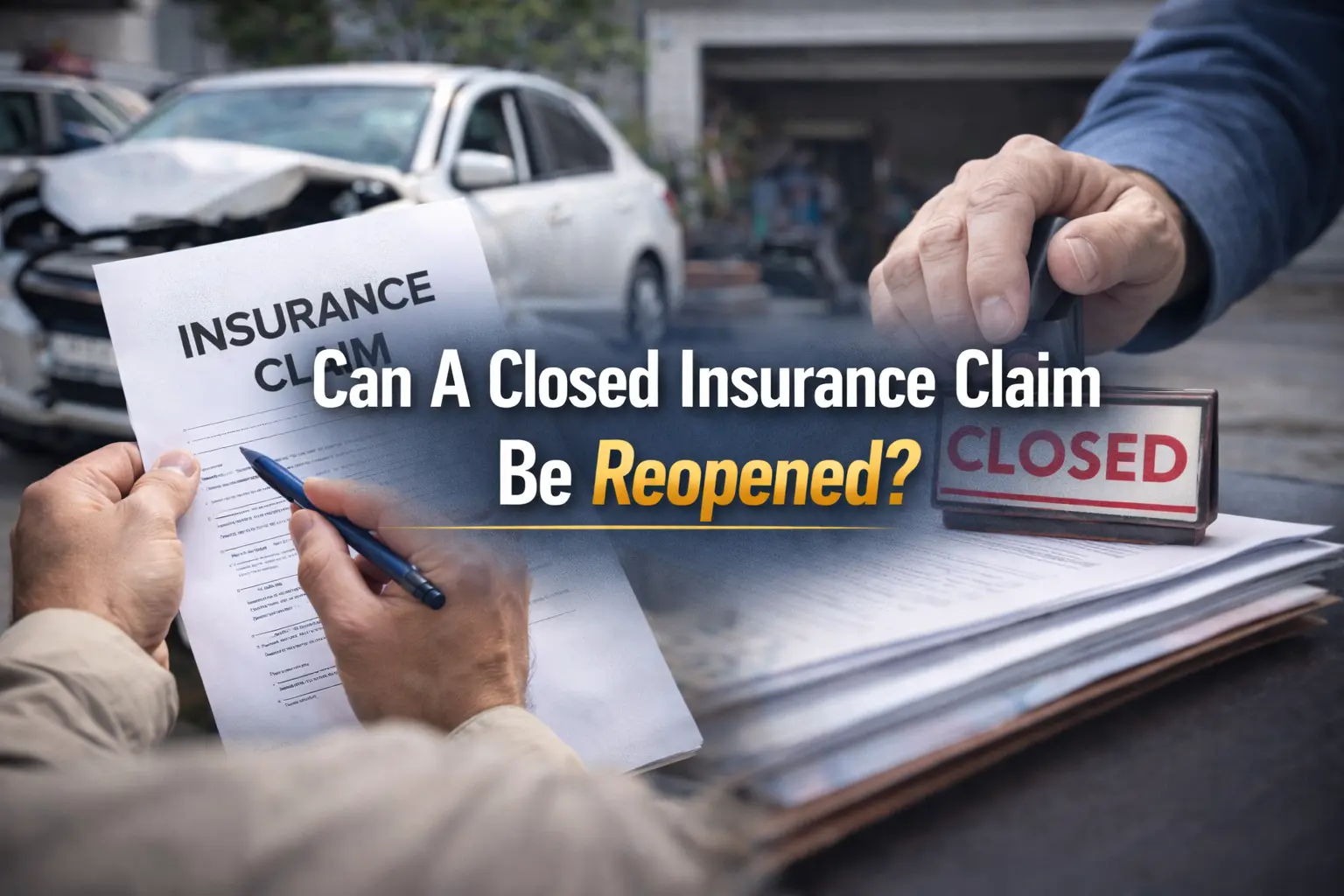
Insurance claims are often stressful, time-consuming, and emotionally draining, whether they involve auto accidents, property damage, health issues, or liability disputes. For many people, the relief of having a claim finally marked as “closed” feels like the end of a long chapter. However, life is rarely that simple. New information may surface, repairs may fail, medical conditions may worsen, or mistakes may come to light after a claim is closed. This leads many policyholders to ask an important and often misunderstood question: can a closed insurance claim be reopened?
The answer is not a simple yes or no. In many situations, a closed insurance claim can be reopened, but only under specific conditions and within certain time limits. This comprehensive guide explains exactly how reopening a closed insurance claim works, when it is possible, when it is not, and what steps you need to take to protect your rights and financial interests.
Also Explore: Can You Sue An Insurance Company For Taking Too Long?
Table of Contents
- What Does It Mean When an Insurance Claim Is Closed?
- The Difference Between Closed and Settled Claims
- Common Reasons Insurance Claims Are Closed
- Can a Closed Insurance Claim Be Reopened?
- Situations Where Reopening a Claim Is Commonly Allowed
- When Reopening a Closed Claim Is Difficult or Impossible
- Time Limits for Reopening Insurance Claims
- How Insurance Companies Decide Whether to Reopen a Claim
- The Role of New Evidence in Reopening a Claim
- Reopening a Claim After a Denial
- What Happens If Repairs Fail After a Claim Is Closed?
- How to Request Reopening a Closed Insurance Claim
- The Importance of Documentation
- Can You Reopen a Claim with a Different Insurance Company?
- Legal Help and Reopening Insurance Claims
- Emotional and Financial Impact of Closed Claims
- Common Myths About Reopening Insurance Claims
- Practical Tips to Protect Yourself
- Final Answer:
What Does It Mean When an Insurance Claim Is Closed?
Before understanding whether a claim can be reopened, it is essential to understand what “closed” actually means in insurance terms. A closed claim simply indicates that the insurance company believes all necessary actions related to that claim have been completed. This may include payment being issued, repairs being completed, medical treatment concluding, or a settlement being accepted.
A closed claim does not always mean that the matter is legally final or irreversible. In many cases, claims are closed for administrative reasons, not because every possible issue has been permanently resolved. Insurance companies close claims to manage workload, accounting, and regulatory reporting, but closure does not automatically eliminate future options.
The Difference Between Closed and Settled Claims
One of the most important distinctions to understand is the difference between a closed claim and a settled claim. A closed claim may or may not be settled. A claim becomes settled when a policyholder signs a release agreement accepting payment in exchange for giving up the right to pursue further compensation related to that claim.
If a claim is closed without a signed settlement or release, reopening it is often much easier. If a claim is closed after a settlement agreement is signed, reopening it becomes significantly more difficult and, in many cases, impossible unless extraordinary circumstances exist.
Common Reasons Insurance Claims Are Closed
Insurance claims are closed for many reasons, not all of which mean the policyholder is fully satisfied. Some common reasons include completion of repairs, payment of medical bills, acceptance of a settlement offer, lack of response from the claimant, insufficient documentation, or denial of coverage.
In some cases, claims are closed simply because the insurance company has not heard from the policyholder for a certain period. These administrative closures are among the easiest types of claims to reopen.
Can a Closed Insurance Claim Be Reopened?
So, can a closed insurance claim be reopened? In many cases, yes, but it depends on several critical factors. These include whether the claim was settled, how much time has passed, the type of insurance involved, the reason the claim was closed, and whether new evidence or circumstances exist.
Insurance companies generally allow claims to be reopened when there is a valid reason and when reopening the claim does not violate contractual agreements or legal deadlines.
Situations Where Reopening a Claim Is Commonly Allowed
There are several scenarios in which reopening a closed insurance claim is relatively common and often successful. One of the most frequent situations involves new or worsening damage. For example, after a property insurance claim is closed, additional damage may become visible once repairs begin. If the new damage is related to the original covered event, insurers may allow the claim to be reopened.
Another common reason is delayed medical complications. In auto or injury-related claims, symptoms may worsen or new injuries may be discovered after the claim is closed. If no final settlement was signed, insurers often allow claims to be reopened to account for new medical expenses.
Clerical errors, missing documentation, or incorrect claim handling can also justify reopening. If the insurance company made a mistake in evaluating the claim or failed to include certain covered losses, reopening may be appropriate.
When Reopening a Closed Claim Is Difficult or Impossible
While reopening a closed insurance claim is possible in many situations, there are also circumstances where it is extremely difficult or legally prohibited. The most significant barrier is a signed settlement agreement. Once you sign a release stating that you accept payment as full and final compensation, you generally give up the right to reopen the claim.
Another major limitation is the statute of limitations. Every state and insurance policy has legal time limits for claims. If too much time has passed, reopening the claim may no longer be allowed, even if new information exists.
Claims that were closed due to clear policy exclusions or denied coverage are also harder to reopen unless new evidence proves the original decision was incorrect.
Time Limits for Reopening Insurance Claims
Time is one of the most critical factors in determining whether a closed insurance claim can be reopened. Insurance policies often specify timeframes within which claims must be reported, supplemented, or appealed. These timeframes vary based on the type of insurance and the jurisdiction.
For property insurance claims, reopening is often possible within months or even years, especially if damage is related to the original incident. Auto and liability claims may have shorter windows, particularly when injuries are involved. Health insurance claims often have strict appeal deadlines that must be followed precisely.
Failing to act within these time limits can permanently eliminate the option to reopen a claim.
How Insurance Companies Decide Whether to Reopen a Claim
Insurance companies evaluate reopening requests on a case-by-case basis. They typically consider whether the new information was reasonably discoverable at the time the claim was closed, whether the policyholder acted in good faith, and whether reopening the claim would violate contractual or legal obligations.
Insurers also assess whether the new damages or expenses are directly related to the original covered event. Claims that attempt to add unrelated losses are usually denied.
The Role of New Evidence in Reopening a Claim
New evidence is one of the strongest justifications for reopening a closed insurance claim. This can include additional repair estimates, expert evaluations, medical diagnoses, photographs, videos, or witness statements that were not available earlier.
The key factor is whether the evidence genuinely changes the understanding of the claim. Insurance companies are more likely to reopen claims when new evidence clearly demonstrates that the original payout was insufficient or incomplete.
Reopening a Claim After a Denial
A denied claim can sometimes be reopened, especially if the denial was based on incomplete information or misinterpretation of the policy. Policyholders often have the right to appeal denied claims within a specific timeframe.
If you can provide documentation proving coverage applies or showing that the insurer’s reasoning was flawed, the claim may be reopened and re-evaluated.
What Happens If Repairs Fail After a Claim Is Closed?
A very common real-world scenario involves property repairs that fail or reveal hidden damage after a claim is closed. In these cases, reopening the claim may be possible if the damage is directly connected to the original covered loss.
Insurance companies generally do not cover poor workmanship by contractors, but they may cover previously undiscovered damage that was masked by temporary repairs or inaccessible areas.
How to Request Reopening a Closed Insurance Claim
Reopening a closed claim usually starts with contacting the insurance company or adjuster who handled the original claim. This request should be made in writing whenever possible and should clearly explain why reopening is necessary.
Include all supporting documentation, reference the original claim number, and clearly connect the new information to the original loss. Being organized, factual, and professional significantly improves the chances of success.
The Importance of Documentation
Strong documentation is essential when reopening a claim. This includes copies of the original claim file, repair invoices, medical records, photographs, correspondence, and expert opinions.
Insurance companies rely heavily on documentation to justify claim decisions. The more complete and clear your evidence is, the harder it is for an insurer to dismiss your request.
Can You Reopen a Claim with a Different Insurance Company?
In situations involving multiple insurers, such as auto accidents or liability claims, reopening a claim with one insurer may affect claims with others. However, reopening a claim with a different insurer than the original one is usually not possible unless that insurer was originally involved.
Claims are tied to specific policies, coverage periods, and events. You cannot reopen a claim under a policy that did not apply at the time of the loss.
Legal Help and Reopening Insurance Claims
In complex or high-value cases, consulting an attorney or public adjuster may be beneficial. Legal professionals can review policy language, settlement agreements, and state laws to determine whether reopening is possible.
While not always necessary, professional guidance can be especially valuable when insurers deny reopening requests or when large sums of money are involved.
Emotional and Financial Impact of Closed Claims
Reopening a closed insurance claim is not just a technical process; it can also be emotionally taxing. Many policyholders feel frustrated or overwhelmed when issues arise after a claim is supposedly finished.
Understanding your rights and knowing that reopening may be possible can provide peace of mind and prevent unnecessary financial hardship.
Common Myths About Reopening Insurance Claims
One common myth is that once a claim is closed, it is permanently locked. In reality, many claims are reopened every day for valid reasons. Another misconception is that insurance companies automatically refuse reopening requests. While insurers are cautious, they do allow reopening when justified.
Some people also believe reopening a claim will cancel future coverage. While insurers track claims history, reopening a legitimate claim does not automatically result in policy cancellation.
Practical Tips to Protect Yourself
To protect yourself, never rush to accept a settlement without fully understanding its implications. Keep detailed records of all communications, repairs, and medical treatment. Ask questions before signing any release forms.
If something feels unresolved, address it before agreeing to close the claim whenever possible.
Final Answer:
So, can a closed insurance claim be reopened? In many cases, yes, especially when the claim was closed without a final settlement, when new evidence emerges, or when additional damages are discovered. However, reopening becomes difficult or impossible when a settlement release has been signed or legal deadlines have passed.
The key factors are timing, documentation, and the reason for reopening. Acting quickly and providing clear evidence greatly increases your chances of success.

COMMENTS