
Insurance is often discussed in terms of large corporations, national carriers, and complex policy language, but for millions of individuals and small
Last Updated on December 23, 2025 by Asad Saad
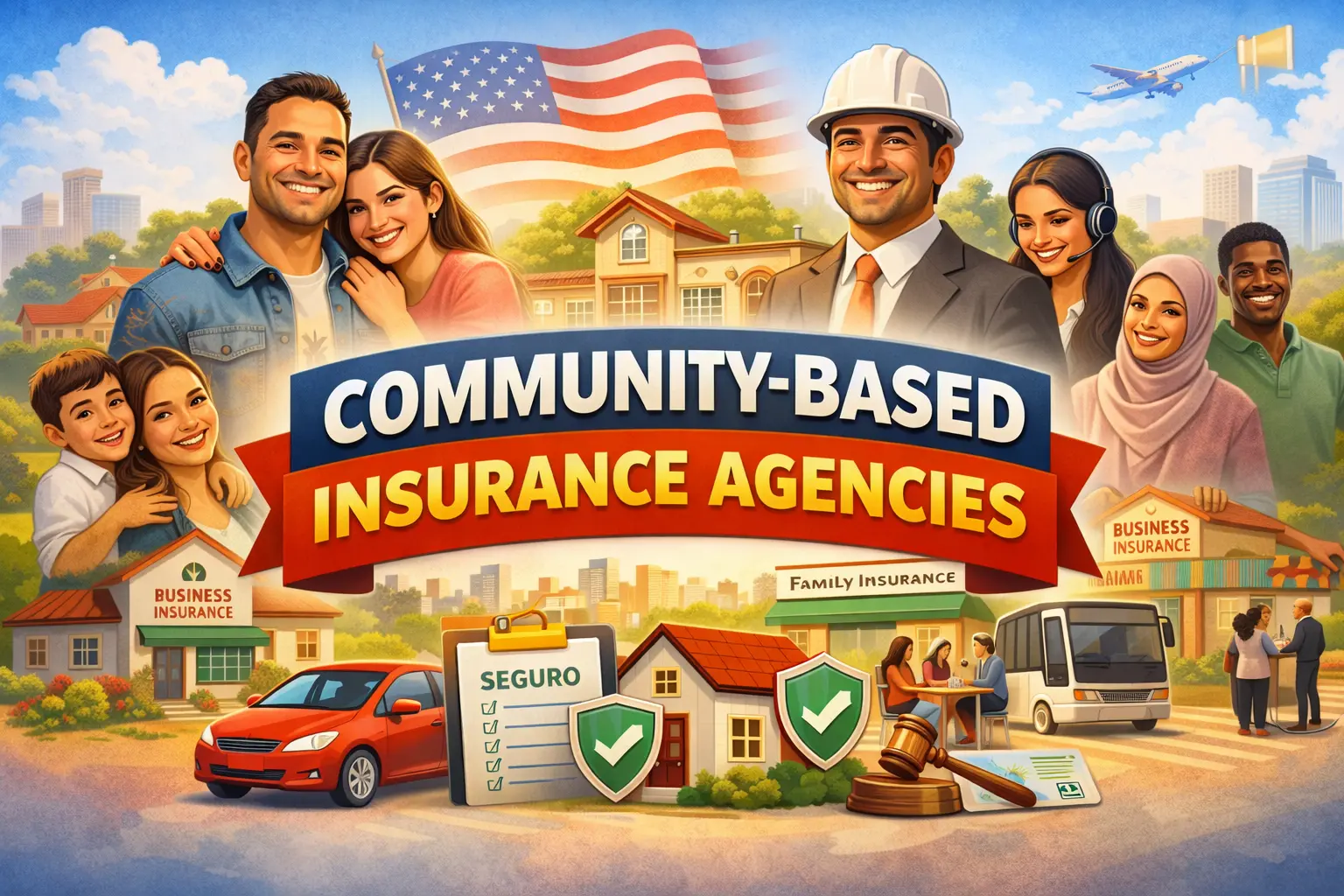
Insurance is often discussed in terms of large corporations, national carriers, and complex policy language, but for millions of individuals and small businesses, insurance is a deeply personal and local matter. This is where community-based insurance agencies play a crucial role. These agencies operate at the intersection of insurance expertise and local understanding, offering protection solutions that are shaped by the real-world needs of the communities they serve. Unlike large, centralized insurers that focus on standardized products and automated processes, community-based insurance agencies emphasize relationships, trust, accessibility, and tailored guidance. Understanding how these agencies work, who they serve, and why they matter is essential for anyone seeking insurance that goes beyond generic coverage.
Community-based insurance agencies are not a new concept, but their importance has grown as many consumers feel disconnected from large insurers and digital-only platforms. As risks become more complex and communities more diverse, local agencies that understand social, economic, and environmental realities are becoming increasingly valuable. This guide explores community-based insurance agencies in depth, covering their structure, functions, benefits, challenges, and long-term relevance in the modern insurance ecosystem.
Table of Contents
- What Are Community-Based Insurance Agencies?
- The Role of Community-Based Insurance Agencies in the Insurance System
- Key Characteristics That Define Community-Based Insurance Agencies
- Types of Insurance Offered by Community-Based Insurance Agencies
- Why Community-Based Insurance Agencies Matter to Local Communities
- Community-Based Insurance Agencies vs Large National Insurance Companies
- The Role of Community-Based Agencies in Underserved and Minority Communities
- Challenges Faced by Community-Based Insurance Agencies
- The Future of Community-Based Insurance Agencies
- Conclusion: Why Community-Based Insurance Agencies Still Matter
What Are Community-Based Insurance Agencies?
Community-based insurance agencies are locally rooted insurance intermediaries that primarily serve a defined community. This community may be based on geography, such as a neighborhood, town, or region, or it may be defined by shared characteristics such as culture, language, profession, income level, or industry. These agencies typically operate as independent agents or brokers, meaning they represent multiple insurance carriers rather than a single insurance company.
The defining feature of a community-based insurance agency is not the size of its operation, but its close connection to the people it serves. These agencies are often owned and operated by individuals who live and work within the same community as their clients. This proximity allows them to understand local risks, economic pressures, regulatory environments, and cultural considerations in a way that national insurers often cannot.
Rather than selling one-size-fits-all policies, community-based insurance agencies focus on helping clients understand coverage options, assess risks realistically, and choose policies that align with their actual needs. Their role is advisory as much as transactional, making them particularly valuable for people who find insurance confusing, intimidating, or inaccessible.
The Role of Community-Based Insurance Agencies in the Insurance System
Community-based insurance agencies function as a bridge between insurance carriers and policyholders. They do not usually underwrite policies or assume financial risk themselves. Instead, they work with licensed insurance companies to place coverage on behalf of clients. Their value lies in interpretation, guidance, and advocacy rather than product creation.
One of their primary roles is risk assessment at the local level. Because these agencies are embedded in the community, they have firsthand knowledge of common risks such as weather patterns, crime trends, housing conditions, business practices, and regulatory enforcement. This allows them to recommend coverage that reflects real exposure rather than theoretical risk models.
Another critical role is insurance education. Many consumers purchase insurance without fully understanding what is covered, what is excluded, and how claims work. Community-based agencies spend time explaining policy terms in plain language, helping clients make informed decisions rather than rushed or misunderstood purchases.
They also serve as claims advocates, assisting clients when losses occur. While claims are ultimately handled by the insurance carrier, a community-based agent can guide clients through the process, clarify documentation requirements, and help resolve disputes. This local advocacy is one of the most valued aspects of community-based agencies.
Key Characteristics That Define Community-Based Insurance Agencies
Community-based insurance agencies share several characteristics that distinguish them from large insurers and online platforms. These traits are not accidental but are central to their operating philosophy.
They are relationship-driven, prioritizing long-term client relationships over high-volume sales. Many clients work with the same agent for years or even decades, creating continuity and trust that is rare in larger insurance systems.
They offer personalized service, which includes face-to-face meetings, phone consultations with familiar staff, and customized policy recommendations. This approach is especially important for clients with complex insurance needs or limited insurance literacy.
They are locally knowledgeable, understanding community-specific risks, regulations, and economic conditions. This allows them to tailor coverage recommendations more accurately than generic algorithms or call centers.
They are often culturally aware and inclusive, particularly in communities with immigrant populations or linguistic diversity. Many community-based agencies provide services in multiple languages and understand cultural attitudes toward insurance, finance, and risk.
Finally, they tend to be ethically accountable, as their reputation within the community directly affects their survival. Poor service or misleading advice can quickly damage trust in a close-knit environment.
Types of Insurance Offered by Community-Based Insurance Agencies
Community-based insurance agencies typically offer a broad range of insurance products, depending on the needs of their community and the carriers they represent. These offerings often include personal, commercial, and specialty insurance lines.
On the personal side, agencies commonly assist with auto insurance, homeowners insurance, renters insurance, life insurance, and sometimes health insurance guidance. For individuals and families, the agency’s role is often to balance affordability with adequate protection, helping clients avoid underinsurance while staying within budget.
For small businesses, community-based agencies play a particularly important role. They help business owners navigate general liability insurance, commercial property insurance, workers’ compensation, professional liability, commercial auto, and industry-specific coverages. Small businesses often lack dedicated risk managers, making local agency guidance essential.
In some communities, agencies also specialize in niche or high-risk coverage such as flood insurance, agricultural insurance, trucking insurance, or coverage for shared housing and informal businesses. In underserved areas, they may support microinsurance products designed for low-income households or small entrepreneurs.
Why Community-Based Insurance Agencies Matter to Local Communities
The importance of community-based insurance agencies extends beyond individual policyholders. These agencies contribute to the overall resilience and stability of the communities they serve.
By improving access to insurance, they help individuals and businesses recover more quickly from losses, reducing long-term economic disruption. When people understand their coverage and trust their agent, they are more likely to maintain continuous insurance protection rather than letting policies lapse.
Community-based agencies also promote financial literacy. Through everyday interactions, they educate clients about risk management, legal requirements, and long-term planning. This education can prevent costly mistakes and improve overall financial stability within the community.
Economically, these agencies support local employment and keep money circulating within the community. Unlike large insurers whose profits may leave the region, community-based agencies reinvest locally through wages, taxes, and community involvement.
They also play a role in community advocacy, often participating in local business associations, neighborhood groups, and disaster recovery efforts. During crises such as natural disasters or economic downturns, local agencies often serve as trusted information sources.
Community-Based Insurance Agencies vs Large National Insurance Companies
The difference between community-based insurance agencies and large national insurance companies lies not only in size but in approach. Large insurers are designed for efficiency, scalability, and standardization. They rely heavily on automated underwriting, call centers, and digital platforms to manage millions of policies.
Community-based agencies, by contrast, prioritize customization and human interaction. While they may not always offer the lowest advertised premiums, they often deliver better long-term value through accurate coverage, fewer claim disputes, and stronger client support.
National insurers may excel at simple, low-risk policies that fit standardized models. However, when risks are complex, evolving, or tied to local conditions, community-based agencies often provide superior guidance. The choice between the two is not about which is universally better, but which is more appropriate for a specific situation.
The Role of Community-Based Agencies in Underserved and Minority Communities
Community-based insurance agencies are especially important in underserved and minority communities, where access to insurance may be limited by language barriers, mistrust of institutions, or lack of financial education.
In these settings, local agencies often act as cultural translators, explaining insurance concepts in familiar terms and addressing concerns rooted in past experiences. They help clients navigate legal requirements and avoid predatory or unsuitable products.
By building trust and offering accessible guidance, these agencies can increase insurance participation, which in turn improves community resilience and economic inclusion. This role cannot be easily replicated by automated platforms or distant call centers.
Challenges Faced by Community-Based Insurance Agencies
Despite their strengths, community-based insurance agencies face significant challenges. Competition from large insurers and direct-to-consumer platforms has increased pressure on pricing and margins. Technology investments are often costly, making it difficult for small agencies to keep up with digital expectations.
Regulatory complexity is another challenge. Insurance regulations change frequently, and compliance requirements can be burdensome for smaller operations with limited administrative resources.
Additionally, succession planning is a growing issue. Many community-based agencies are family-owned or led by long-serving principals, and finding successors who share the same commitment to community service can be difficult.
Despite these challenges, many agencies adapt by embracing selective technology, expanding advisory services, and reinforcing their value proposition around trust and expertise.
The Future of Community-Based Insurance Agencies
The future of community-based insurance agencies is not about competing with large insurers on scale, but about complementing them through specialization and service quality. As insurance risks become more complex due to climate change, economic uncertainty, and evolving business models, the need for human judgment and local insight is likely to grow.
Hybrid models that combine digital tools with personal service are becoming more common. Community-based agencies that adopt technology thoughtfully while preserving their relational approach are well positioned to thrive.
Their role as educators, advocates, and trusted advisors ensures they remain relevant in an increasingly automated insurance landscape.
Conclusion: Why Community-Based Insurance Agencies Still Matter
Community-based insurance agencies are a vital part of the insurance ecosystem, providing personalized guidance, local expertise, and human support that large insurers and digital platforms often lack. They help individuals and businesses understand risk, choose appropriate coverage, and navigate claims with confidence.
By serving communities rather than markets, these agencies strengthen trust, improve financial resilience, and contribute to local economic stability. For policyholders who value clarity, accessibility, and long-term relationships, community-based insurance agencies remain one of the most effective ways to secure meaningful insurance protection.

COMMENTS