
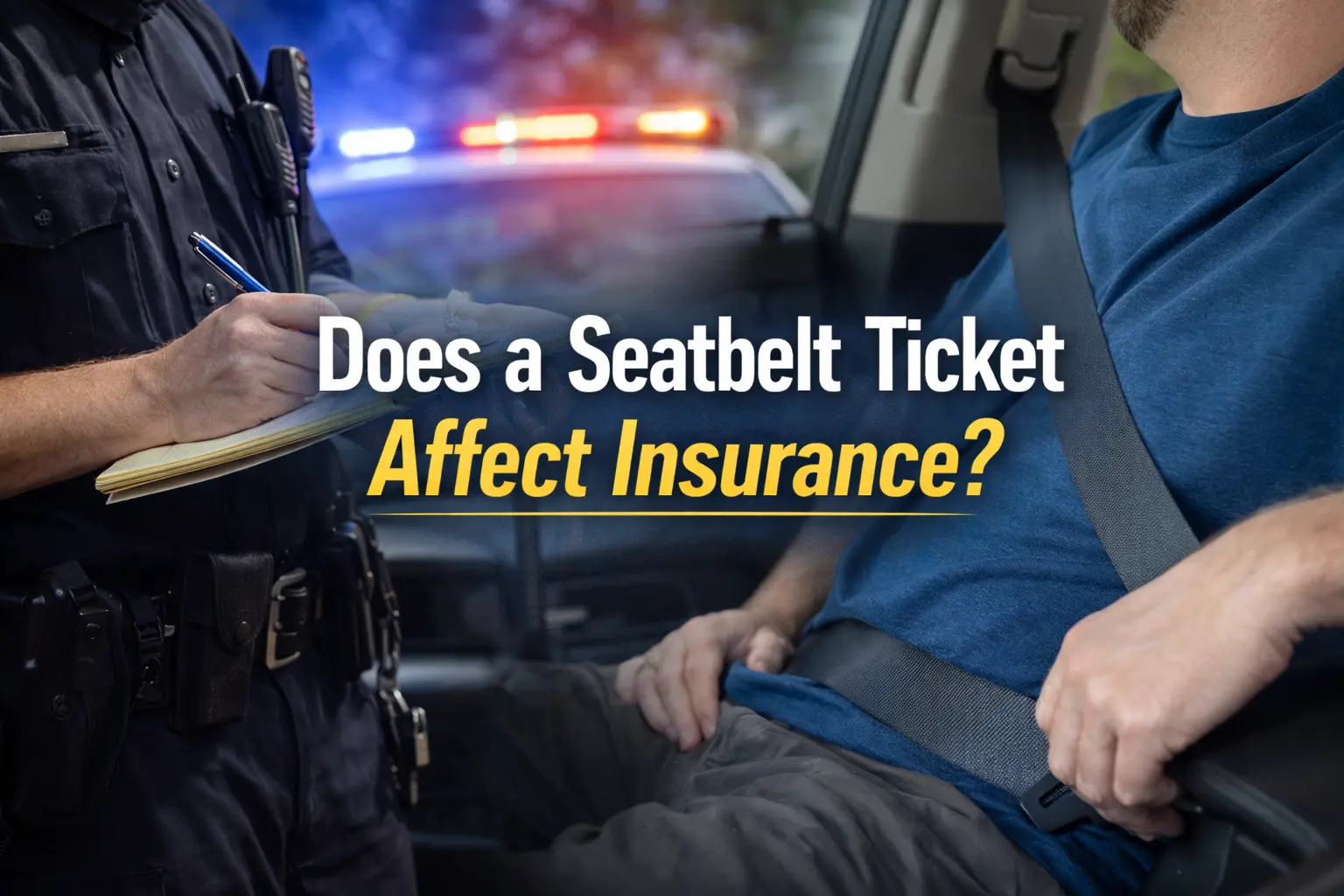
Traffic tickets can be stressful, even when they seem minor. Many drivers assume that only serious violations like speeding, reckless driving, or DUIs
Last Updated on February 13, 2026 by Aliya Amber
Traffic tickets can be stressful, even when they seem minor. Many drivers assume that only serious violations like speeding, reckless driving, or DUIs impact car insurance rates. This leads to a very common and important question: does a seatbelt ticket affect insurance? The concern is understandable because insurance premiums are already expensive, and even a small increase can add up significantly over time.
The reality is more nuanced than a simple yes or no. A seatbelt ticket can affect your insurance in certain situations, but in many cases it does not. Whether it impacts your premium depends on several factors, including your state laws, whether the violation is recorded on your driving record, how your insurance company evaluates risk, and your overall driving history. This in-depth guide explains everything you need to know so you can clearly understand the real-world impact of a seatbelt ticket on insurance.
Also Find: How Much Does Your Insurance Increase For A Speeding Ticket?
Table of Contents
- Understanding What a Seatbelt Ticket Is
- Primary vs Secondary Seatbelt Laws
- Is a Seatbelt Ticket a Moving Violation?
- How Insurance Companies Decide Whether to Raise Rates
- Points on Your Driving Record and Why They Matter
- Does a Seatbelt Ticket Show Up on Insurance Reports?
- Single Seatbelt Ticket vs Multiple Violations
- Seatbelt Tickets for Passengers and Insurance Impact
- Seatbelt Tickets and Teen Drivers
- Does a Seatbelt Ticket Affect Insurance Immediately?
- Differences Between States and Insurance Companies
- Will a Seatbelt Ticket Affect Insurance Discounts?
- Seatbelt Tickets and Accident Claims
- Can You Fight a Seatbelt Ticket?
- How Long Does a Seatbelt Ticket Stay on Your Record?
- What You Can Do to Minimize Insurance Impact
- Myths About Seatbelt Tickets and Insurance
- The Bigger Picture: Why Insurers Care About Seatbelts
- Final Thoughts:
Understanding What a Seatbelt Ticket Is
A seatbelt ticket is a traffic citation issued when a driver or passenger is not wearing a seatbelt as required by law. Seatbelt laws exist in nearly all states and are designed to reduce injuries and fatalities in accidents. While the violation may feel minor compared to speeding or running a red light, it is still considered a traffic offense.
Seatbelt tickets are generally classified as non-moving violations or minor infractions, but this classification varies by state. This classification plays a major role in determining whether the ticket affects your insurance.
Primary vs Secondary Seatbelt Laws
One of the most important factors in understanding whether a seatbelt ticket affects insurance is whether your state has primary or secondary seatbelt enforcement laws.
In states with primary enforcement, police officers can stop a vehicle solely for a seatbelt violation. In states with secondary enforcement, an officer can only issue a seatbelt ticket if the driver was stopped for another violation, such as speeding or running a stop sign.
This distinction matters because in secondary enforcement states, a seatbelt ticket is often attached to another violation that does affect insurance. In such cases, the insurance impact may come from the primary violation rather than the seatbelt ticket itself.
Is a Seatbelt Ticket a Moving Violation?
Insurance companies care most about moving violations because they indicate risky driving behavior. Moving violations involve actions that affect how a vehicle is operated, such as speeding, tailgating, or failing to yield.
In many states, seatbelt tickets are considered non-moving violations, similar to parking tickets or equipment violations. Non-moving violations usually do not affect insurance rates directly. However, this is not universal, and some states classify seatbelt violations differently.
If a seatbelt ticket is treated as a non-moving violation and does not add points to your driving record, it is less likely to impact your insurance.
How Insurance Companies Decide Whether to Raise Rates
Insurance companies do not automatically raise rates for every ticket. Instead, they use complex risk assessment models that evaluate your driving history as a whole. These models look at patterns of behavior, not just isolated incidents.
When asking does a seatbelt ticket affect insurance, it helps to understand that insurers focus on violations that statistically correlate with accidents and claims. Speeding, distracted driving, and impaired driving carry strong risk indicators. Seatbelt violations, while unsafe, are often viewed as personal safety violations rather than driving behavior violations.
Because of this, many insurance companies do not increase premiums for a single seatbelt ticket, especially if your driving record is otherwise clean.
Points on Your Driving Record and Why They Matter
Some states use a points system, where traffic violations add points to your driving record. Accumulating too many points can lead to license suspension and higher insurance premiums.
In many states, seatbelt violations do not add points to your driving record. When no points are added, insurance companies are less likely to view the violation as premium-worthy.
However, if a seatbelt ticket does add points in your state, or if it is bundled with another violation that adds points, there is a higher chance your insurance company may consider it during renewal.
Does a Seatbelt Ticket Show Up on Insurance Reports?
Insurance companies typically review driving records through reports provided by state motor vehicle departments. If a seatbelt ticket appears on your official driving record, it is visible to insurers, even if it does not automatically trigger a rate increase.
Visibility alone does not guarantee an insurance increase. Many insurers will see the violation but choose not to adjust premiums unless there is a pattern of repeated offenses or additional risk factors.
Single Seatbelt Ticket vs Multiple Violations
A single seatbelt ticket rarely causes an insurance rate increase by itself. However, multiple seatbelt tickets over time can paint a different picture.
Repeated seatbelt violations may suggest a pattern of ignoring safety laws. When combined with other infractions, this pattern can influence how insurers assess risk. In such cases, even minor violations can contribute to a premium increase.
Seatbelt Tickets for Passengers and Insurance Impact
Another common question is whether a seatbelt ticket issued for a passenger affects the driver’s insurance. The answer depends on state law.
In many states, drivers are responsible for ensuring that minor passengers wear seatbelts. Tickets issued for unbelted minors may be recorded under the driver’s record, which could increase the chance of insurance impact.
For adult passengers, some states issue the ticket directly to the passenger rather than the driver. In these cases, the driver’s insurance is usually not affected.
Seatbelt Tickets and Teen Drivers
Seatbelt tickets can have a greater impact when they involve teen or new drivers. Insurance companies already view young drivers as higher risk due to lack of experience.
A seatbelt violation on a teen’s record may contribute to higher premiums or the loss of good student or safe driver discounts. Parents should take seatbelt tickets seriously when young drivers are involved, even if the fine itself is small.
Does a Seatbelt Ticket Affect Insurance Immediately?
Insurance companies typically review driving records at policy renewal, not immediately after a ticket is issued. This means you may not see any change in your premium until your next renewal period.
If your insurance company does not review minor violations or if the seatbelt ticket is not considered rate-impacting, your premium may remain unchanged.
Differences Between States and Insurance Companies
There is no universal rule across all states or insurance providers. Some insurers are more forgiving of minor violations, while others apply stricter rating models.
State regulations also influence how insurers can use traffic violations. In some states, insurers are legally restricted from using certain minor violations to increase rates.
This is why two drivers with identical seatbelt tickets may experience different insurance outcomes depending on location and insurer.
Will a Seatbelt Ticket Affect Insurance Discounts?
Even if a seatbelt ticket does not directly increase your base premium, it could affect discount eligibility. Some insurers offer safe driver discounts that require a clean driving record.
A seatbelt ticket may disqualify you from these discounts, indirectly increasing what you pay, even if the base rate remains unchanged.
Seatbelt Tickets and Accident Claims
If you receive a seatbelt ticket after an accident, the situation changes. While the ticket itself may not raise rates, insurance companies may consider seatbelt usage when evaluating injury claims.
In some states, failure to wear a seatbelt can reduce injury compensation under comparative negligence rules. This does not directly affect premiums but can affect claim payouts.
Can You Fight a Seatbelt Ticket?
Fighting a seatbelt ticket may be an option, depending on circumstances. If the ticket is dismissed or reduced, it may never appear on your driving record.
Avoiding record entry is the most effective way to ensure the ticket does not affect insurance. However, legal fees and time commitment should be weighed against the potential benefit.
How Long Does a Seatbelt Ticket Stay on Your Record?
The length of time a seatbelt ticket stays on your driving record varies by state. In many cases, minor violations remain for one to three years.
Even if the ticket stays on your record, its impact on insurance often diminishes over time, especially if no additional violations occur.
What You Can Do to Minimize Insurance Impact
Maintaining a clean driving record overall is the best protection. Defensive driving courses, where available, may help reduce points or demonstrate safe driving behavior.
Avoiding additional violations during the same policy period greatly reduces the likelihood of insurance consequences.
Myths About Seatbelt Tickets and Insurance
A common myth is that any ticket automatically raises insurance. In reality, many minor violations do not affect premiums at all.
Another misconception is that paying the fine means admitting guilt in a way that guarantees insurance penalties. While paying a ticket usually closes the case, it does not automatically trigger an insurance increase.
The Bigger Picture: Why Insurers Care About Seatbelts
While insurers strongly encourage seatbelt use for safety reasons, they focus primarily on accident frequency and claim severity. Seatbelts reduce injury costs, which benefits insurers.
Ironically, while not wearing a seatbelt increases injury risk, insurers often focus more on behaviors that cause accidents rather than behaviors that worsen injury outcomes.
Final Thoughts:
So, does a seatbelt ticket affect insurance? Usually, no—at least not directly, especially if it is a first offense, classified as a non-moving violation, and does not add points to your driving record. However, it can affect insurance in certain situations, such as when it adds points, involves minors, is combined with other violations, or impacts eligibility for discounts.
The true impact depends on state laws, insurer policies, and your overall driving history.

COMMENTS