
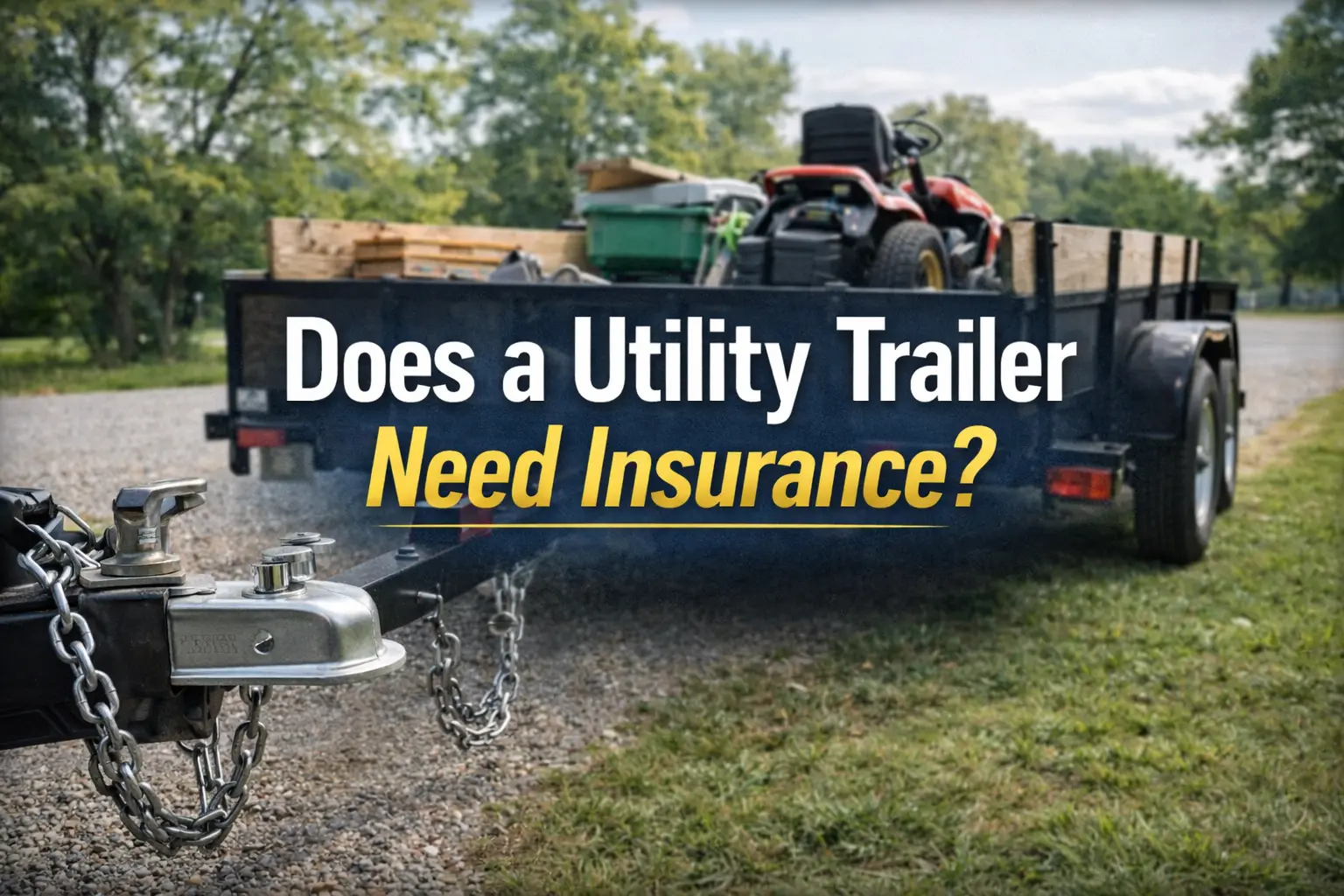
Buying a utility trailer opens the door to incredible convenience. Whether you are hauling landscaping equipment, moving furniture, transporting ATVs,
Last Updated on February 13, 2026 by Aliya Amber
Buying a utility trailer opens the door to incredible convenience. Whether you are hauling landscaping equipment, moving furniture, transporting ATVs, or carrying construction materials, a trailer dramatically increases what your vehicle can handle. But the moment people bring one home, an important question usually follows: does a utility trailer need insurance? The answer is not as simple as yes or no. It depends on how the trailer is used, who owns it, whether it is financed, state regulations, and how your auto policy treats attached equipment.
Many trailer owners assume their existing car insurance automatically covers everything. Others believe trailers require a completely separate policy like a vehicle. The truth sits somewhere in between. In many cases, liability coverage may extend from the towing vehicle, but physical damage, theft, and certain types of accidents often require additional protection. Without understanding the details, owners may discover gaps in coverage only after an expensive loss.
Also Explore: Can An Insurance Company Sue You?
Table of Contents
- What Is Considered a Utility Trailer?
- Why People Think They Don’t Need Trailer Insurance
- Does a Utility Trailer Need Insurance by Law?
- When Your Auto Insurance Might Cover the Trailer
- What Liability Coverage Does NOT Protect
- Physical Damage Coverage for Utility Trailers
- What About the Cargo Inside the Trailer?
- Does a Utility Trailer Need Insurance for Theft?
- Commercial vs Personal Use
- Does Weight or Size Affect Insurance Requirements?
- What Happens If You Rent or Borrow a Trailer?
- Average Cost of Utility Trailer Insurance
- Situations Where Insurance Saves Owners Thousands
- How to Decide If You Need Separate Coverage
- Common Mistakes Trailer Owners Make
- Final Thoughts:
What Is Considered a Utility Trailer?
A utility trailer is generally defined as a non-motorized vehicle designed to be pulled by a car, truck, or SUV. It may be open or enclosed and is typically used to transport goods, equipment, or recreational vehicles. Because it has no engine of its own, insurers treat it differently from cars and trucks.
Despite being simpler than a motor vehicle, a utility trailer can still cause significant damage if something goes wrong. It can detach, roll, collide with property, or be stolen. Cargo can shift or fall, injuring others or damaging vehicles behind you. These risks are exactly why insurance questions become important.
Why People Think They Don’t Need Trailer Insurance
A very common belief is that because the trailer does not have a motor, it does not need insurance. Many owners hear from friends or online forums that coverage automatically comes from the towing vehicle. While this can be partially true for liability in certain scenarios, it rarely covers everything.
This misunderstanding happens because people mix up liability protection with physical damage protection. Liability pays for damage or injuries you cause to others. Physical damage covers repair or replacement of your own trailer. Auto policies often extend liability while towing, but they may not pay to repair your trailer if it is damaged, overturned, vandalized, or stolen.
Does a Utility Trailer Need Insurance by Law?
In many states, utility trailers are not legally required to carry their own liability policy because they rely on the towing vehicle’s coverage. However, legal requirements can change depending on weight, usage, and whether the trailer is commercial.
Even if the law does not mandate separate insurance, lenders might. If you financed the trailer, the financing company may require comprehensive and collision coverage to protect their investment. Failing to maintain coverage could violate loan terms.
Legal minimums are not always equal to smart protection. Just because you are not required to insure it does not mean you should go without coverage.
When Your Auto Insurance Might Cover the Trailer
In most situations, the liability portion of your auto policy extends to a trailer while it is attached to your insured vehicle. If the trailer causes bodily injury or property damage to someone else, your auto liability insurance may respond.
For example, if the trailer swings wide during a turn and hits another car, liability coverage from your towing vehicle may pay for the other driver’s damages. If cargo falls from the trailer and causes an accident, your liability coverage may apply as well.
However, once you detach the trailer, liability protection might disappear. If a parked trailer rolls and damages property, coverage may be limited or excluded depending on policy language.
What Liability Coverage Does NOT Protect
Liability coverage is focused on others, not you. It does not usually pay to repair or replace your trailer. If you back into a pole and bend the frame, liability will not help. If thieves steal it from your driveway, liability will not help. If hail damages it, liability will not help.
This is where many owners are surprised. They assume because the trailer was “covered,” everything is protected. In reality, they only had protection for harm done to others, not their own equipment.
Physical Damage Coverage for Utility Trailers
If you want protection for the trailer itself, you typically need comprehensive and collision coverage. Some insurers allow you to add the trailer as an item on your auto policy. Others may require a separate policy, especially for high-value or commercial trailers.
Collision coverage generally pays if the trailer is damaged in an accident, regardless of fault. Comprehensive coverage usually protects against theft, vandalism, fire, and certain weather events. Together, these cover many of the biggest financial risks owners face.
The cost is often surprisingly affordable, especially when compared to replacing a stolen or destroyed trailer.
What About the Cargo Inside the Trailer?
This is another area where confusion happens. Insurance for the trailer does not automatically mean insurance for what is inside it. Coverage for cargo depends on the type of items and how the trailer is being used.
Personal belongings may fall under homeowners or renters insurance in some cases, but business equipment usually requires commercial coverage. Expensive tools, machinery, or recreational vehicles might need special endorsements.
Failing to clarify cargo coverage can lead to major losses, particularly for contractors or small business owners.
Does a Utility Trailer Need Insurance for Theft?
Trailers are prime targets for theft. They are portable, valuable, and often left in driveways, job sites, or storage lots. Unfortunately, many owners discover too late that theft is not covered under their standard auto liability policy.
Comprehensive coverage is typically needed for theft protection. Some homeowners policies may offer limited coverage, but deductibles and limits might be too low to replace the trailer fully.
Given how common trailer theft is, many insurance professionals strongly recommend adding this protection.
Commercial vs Personal Use
How you use your trailer plays a major role in determining insurance needs. Personal use, such as hauling furniture or yard supplies, often fits within personal auto policy extensions. Commercial use, such as transporting tools or goods for a business, may require commercial auto or inland marine coverage.
Using a personal policy for business activities can create claim problems. Insurers may deny coverage if they determine the trailer was being used outside permitted activities.
Business owners should review coverage carefully to avoid expensive gaps.
Does Weight or Size Affect Insurance Requirements?
Yes, larger and heavier trailers may face different rules. Some states require registration, titles, or additional insurance for trailers above certain weight thresholds. Larger trailers also represent greater risk, which can influence premiums.
High-capacity trailers often carry more valuable cargo, increasing potential claim amounts. Insurers may recommend higher liability limits or specialized coverage.
What Happens If You Rent or Borrow a Trailer?
When renting a trailer, responsibility can depend on the rental agreement. Some rental companies offer insurance options, while others expect your auto policy to extend coverage. Verifying coverage before towing is essential.
Borrowing from a friend creates similar uncertainty. The owner’s insurance may apply in some cases, but your own policy might also become primary depending on circumstances.
Never assume coverage without checking.
Average Cost of Utility Trailer Insurance
One of the most pleasant surprises for owners is affordability. Adding a small utility trailer to an auto policy can sometimes cost only a few dollars per month. Even comprehensive and collision coverage is often far cheaper than insuring a vehicle.
Premiums depend on value, size, usage, and location. Expensive enclosed trailers or commercial setups cost more, but basic coverage for standard trailers is generally budget-friendly.
When compared with replacement costs, insurance is usually a smart investment.
Situations Where Insurance Saves Owners Thousands
Imagine a trailer being stolen overnight from a job site. Without comprehensive coverage, replacement comes directly from your pocket. Or picture an accident where the trailer flips, destroying both the unit and expensive equipment inside. Proper insurance can mean the difference between a manageable inconvenience and financial hardship.
Weather events are another risk. High winds can tip trailers, and hail can cause significant damage. These are unpredictable situations that insurance is designed to handle.
How to Decide If You Need Separate Coverage
The decision usually comes down to value and risk tolerance. If replacing the trailer would be financially painful, insurance makes sense. If it is used for business, coverage is often essential. If theft risk in your area is high, comprehensive protection becomes even more important.
Owners with older or inexpensive trailers might choose to self-insure, accepting the risk. Others prefer peace of mind knowing they are protected.
Common Mistakes Trailer Owners Make
One major mistake is assuming coverage exists without verifying it. Another is forgetting to insure cargo. Some owners underestimate replacement cost or forget to update policies after upgrades.
Waiting until after an accident to read your policy is never a good strategy.
Final Thoughts:
So, does a utility trailer need insurance? Legally, maybe not always. Practically and financially, often yes. While liability may extend from the towing vehicle, protection for the trailer itself, theft, and cargo frequently requires additional coverage.
Understanding how your policy works before something goes wrong allows you to make smart, informed decisions. Trailers are valuable tools that make life easier, but they also carry risk. Insurance ensures that one bad day does not turn into a long-term financial burden.

COMMENTS