
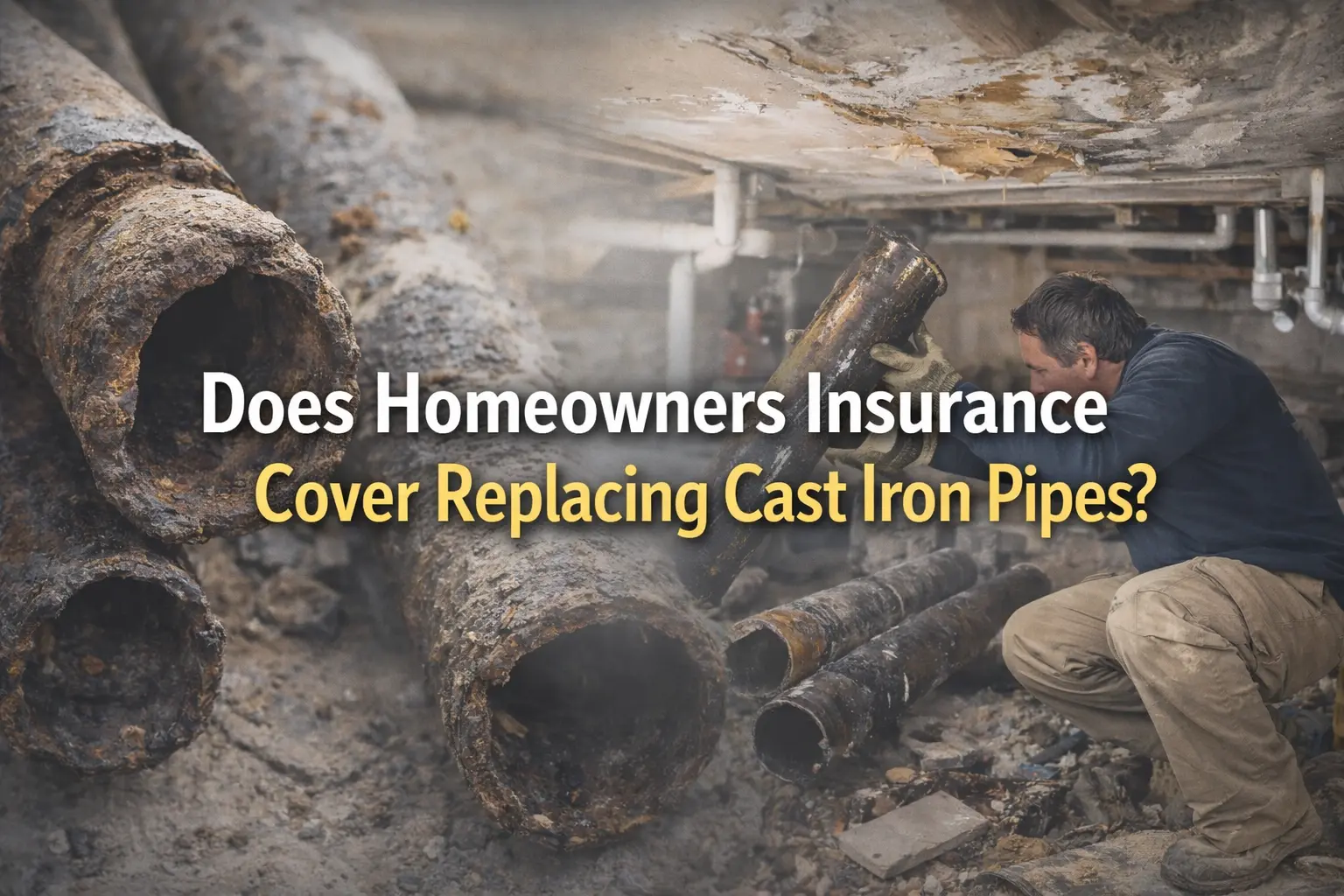
Few discoveries worry homeowners more than plumbing trouble hidden behind walls or beneath floors. Cast iron pipes, once a gold standard in residentia
Last Updated on February 13, 2026 by Aliya Amber
Few discoveries worry homeowners more than plumbing trouble hidden behind walls or beneath floors. Cast iron pipes, once a gold standard in residential construction, are now reaching the end of their lifespan in millions of homes. As they age, they corrode, crack, and sometimes collapse internally, leading to slow drains, sewage backups, foul odors, and water damage. When homeowners hear that replacing these pipes can cost thousands — sometimes tens of thousands — of dollars, the natural question is immediate and urgent: does homeowners insurance cover replacing cast iron pipes?
The answer is not a simple yes or no. Like most insurance questions, coverage depends on the cause of the problem, the wording of the policy, and whether the pipe failure is considered sudden and accidental or gradual deterioration. Insurance companies are designed to pay for unexpected events, not aging infrastructure. However, when pipe failure leads to damage inside the home, parts of the repair process may fall within coverage. Understanding where insurance draws the line can help you plan financially, file smarter claims, and avoid devastating surprises.
This guide explains in depth how insurers view cast iron plumbing, when replacement may be covered, what parts are usually excluded, how water damage claims are handled, and what homeowners can do to protect themselves.
Also Explore: Can You Sue An Insurance Company For Taking Too Long?
Table of Contents
- Why Cast Iron Pipes Are Failing in So Many Homes
- The Core Insurance Rule: Sudden vs Gradual
- Pipe Replacement vs Damage Caused by the Pipe
- When Replacement Might Be Covered
- What Is “Tear Out” Coverage?
- Sewer Backups and Cast Iron Failure
- Why Insurers Resist Paying for Whole-House Repiping
- Hidden Damage and Long-Term Leaks
- The Role of Inspections and Maintenance
- Slab Leaks and Foundation Issues
- Temporary Living Expenses
- How Claims Adjusters Evaluate Pipe Failures
- Preventive Replacement vs Waiting for Failure
- Partial Replacement vs Full Repiping
- The Financial Shock Homeowners Face
- Can You Buy Extra Coverage?
- Real-World Example
- Why Documentation Helps
- Long-Term Insurance Consequences
- Planning Ahead Financially
- Communicating With Your Insurer
- Renovation as Opportunity
- Why This Topic Creates Frustration
- Final Thoughts
Why Cast Iron Pipes Are Failing in So Many Homes
Cast iron plumbing was widely installed from the early 1900s through the 1970s. Builders favored it because it was strong, fire resistant, and excellent at dampening sound. The problem is lifespan. Depending on water chemistry, soil conditions, and usage, cast iron drain lines typically last somewhere between forty and one hundred years. Many homes are now squarely in that danger zone.
Over time, rust forms inside the pipe. The interior diameter narrows, flow slows, and waste can accumulate. Eventually the pipe can crack or develop holes. When that happens, leaks or blockages may develop under slabs or inside walls, often without obvious warning until serious damage occurs.
From an insurance standpoint, this aging process is critical. It is gradual, predictable, and inevitable. Those characteristics push it toward maintenance responsibility rather than insurable risk.
The Core Insurance Rule: Sudden vs Gradual
Homeowners insurance is built on one central idea: it covers sudden and accidental damage. Gradual wear, corrosion, and aging are typically excluded. When an insurer evaluates a cast iron pipe claim, their first question is whether the pipe failed unexpectedly or simply wore out.
If a pipe deteriorated slowly over decades, insurers usually classify replacement as maintenance. Maintenance is the homeowner’s responsibility. But if a pipe suddenly bursts or collapses, causing immediate damage, insurers may treat the resulting destruction differently from the pipe itself.
This is where confusion begins.
Pipe Replacement vs Damage Caused by the Pipe
In many claims, insurers separate the plumbing into two categories. The pipe is one thing; the damage it causes is another.
For example, if corrosion leads to a leak that ruins flooring, drywall, cabinets, or personal belongings, the policy may pay to repair those damaged items. However, it may still refuse to pay for the new plumbing line because the pipe failed due to age.
Homeowners are often shocked by this distinction. They see the pipe as the source of the problem and expect full coverage. Insurers see an old component that reached the end of its life.
When Replacement Might Be Covered
There are limited situations where pipe replacement costs can be included. If a covered peril — such as freezing, accidental impact, or another sudden event — directly causes the pipe to break, insurers may pay for replacement of that section.
Additionally, if access to repair covered damage requires removing part of the plumbing system, some policies include “tear out and replace” language. This means the insurer may pay to open floors or walls to reach the leak. Whether they pay to install entirely new pipes afterward depends on policy interpretation.
What Is “Tear Out” Coverage?
Tear out coverage is one of the most misunderstood features of homeowners insurance. If a leak occurs behind a wall, you must demolish part of the structure to fix it. Many policies pay for opening and then restoring those areas.
However, paying for access is different from paying for upgraded plumbing. Insurers might cover breaking the slab and repairing the floor but decline the cost of repiping the entire system.
Sewer Backups and Cast Iron Failure
When cast iron pipes deteriorate, backups can occur. Some policies offer optional endorsements for sewer or drain backups. If you purchased that coverage, cleanup and interior damage may be insured. But again, the old pipes themselves may remain excluded.
Why Insurers Resist Paying for Whole-House Repiping
Replacing all cast iron plumbing can cost enormous amounts. Insurance companies argue that paying for total repiping would effectively turn policies into home warranty programs. Since deterioration is expected over time, insurers say homeowners should budget for eventual replacement.
From a business perspective, covering full system upgrades would dramatically increase premiums for everyone.
Hidden Damage and Long-Term Leaks
Sometimes homeowners discover water damage that has been occurring for months or years. Many policies exclude long-term or repeated seepage. If evidence shows the leak was not sudden, insurers may deny both pipe and interior repairs.
Prompt attention to early warning signs is therefore crucial.
The Role of Inspections and Maintenance
Insurers may request maintenance records or prior inspection reports. If they believe the homeowner ignored known issues, denial becomes more likely. Staying proactive with plumbing evaluations can help protect future claims.
Slab Leaks and Foundation Issues
Cast iron pipes often run beneath concrete slabs. When they fail, accessing them can require major demolition. Some policies will pay for access and restoring the slab if the leak is sudden. Others impose limits.
Understanding your specific policy language matters enormously.
Temporary Living Expenses
If water damage makes the home uninhabitable, additional living expense coverage may pay for temporary housing. Again, this depends on whether the triggering event is covered.
How Claims Adjusters Evaluate Pipe Failures
Adjusters look for rust patterns, thickness of corrosion, and signs of long-term degradation. Expert plumbers may be consulted. Their conclusion about whether failure was sudden can determine the entire outcome.
Preventive Replacement vs Waiting for Failure
Some homeowners replace pipes proactively to avoid disaster. Insurance will almost never reimburse preventive work because no damage occurred.
Partial Replacement vs Full Repiping
Even when a claim is approved, insurers may only pay to replace the failed section. If the rest of the system is also aging, you may still face large out-of-pocket costs.
The Financial Shock Homeowners Face
Many buyers of older homes are unaware of the risk. Discovering mid-five-figure repair estimates without insurance help can be devastating. This is why understanding limitations before problems arise is vital.
Can You Buy Extra Coverage?
Some insurers offer service line or water backup endorsements. These may expand protection but rarely eliminate all exclusions. Reading details carefully is essential.
Real-World Example
Two houses have identical pipes. In one, corrosion slowly causes a leak discovered during remodeling. No coverage. In the other, a pipe collapses overnight and floods rooms. Interior damage may be covered, but system replacement might not be.
Why Documentation Helps
Photos, plumber statements, and rapid reporting improve credibility. Waiting too long can harm your claim.
Long-Term Insurance Consequences
Large water claims can affect future premiums. Sometimes homeowners choose to pay smaller repairs themselves.
Planning Ahead Financially
Owners of older homes often create savings reserves for plumbing. This reduces stress if insurance denies replacement.
Communicating With Your Insurer
Before disaster strikes, ask your agent how cast iron failures are handled. Clear expectations beat assumptions.
Renovation as Opportunity
If you must open floors for covered repairs, some homeowners choose to upgrade additional lines at their own expense to avoid future problems.
Why This Topic Creates Frustration
Homeowners see insurance as protection from big bills. Insurers see predictable aging. That philosophical difference fuels many disputes.
Final Thoughts
So, does homeowners insurance cover replacing cast iron pipes? Usually not when deterioration is the cause. But if sudden failure leads to property damage, parts of the repair — especially the damage itself and access work — may be covered. The pipe and the destruction it causes are treated separately.
Understanding that distinction lets homeowners prepare, maintain realistic expectations, and make smarter financial decisions.

COMMENTS