
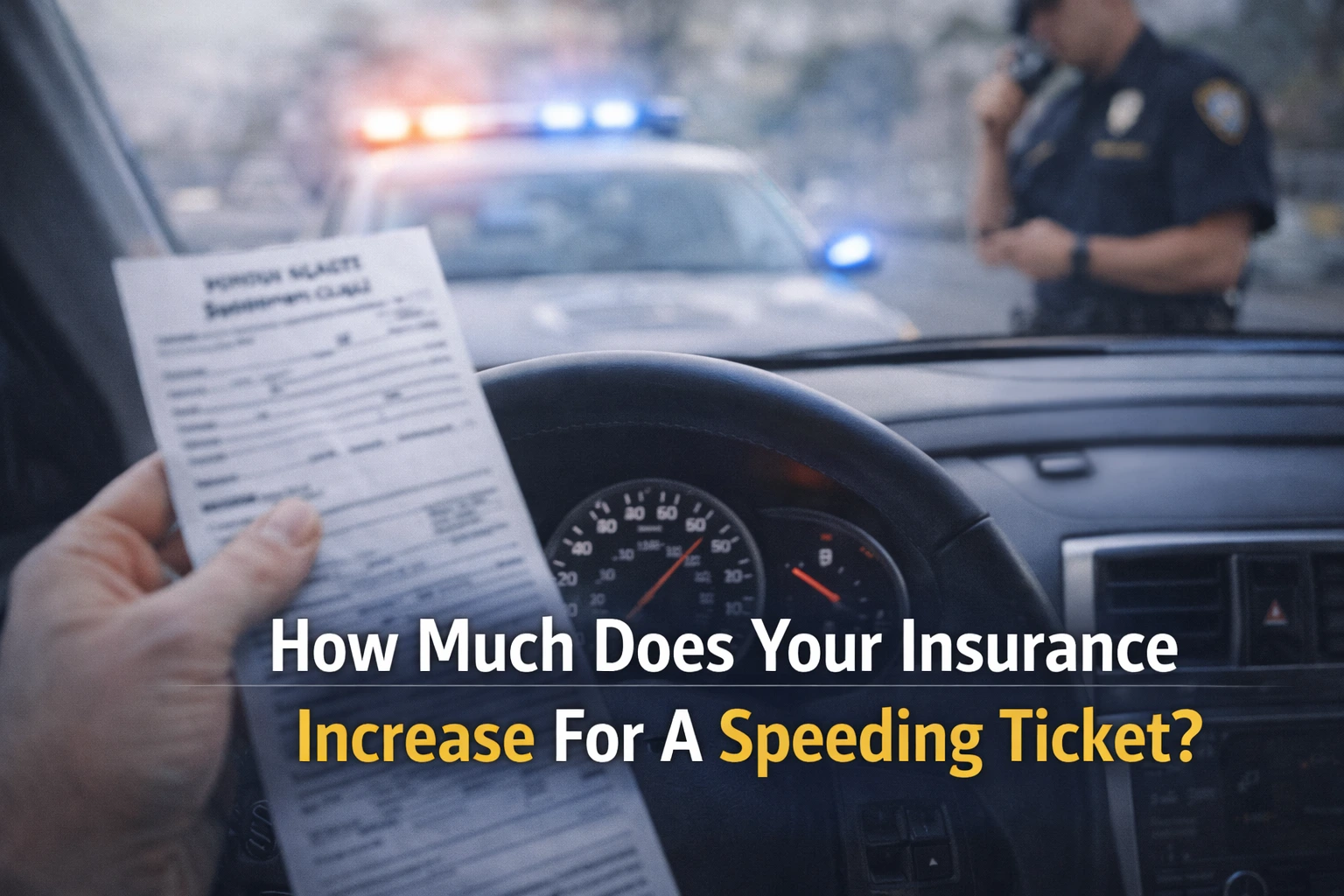
A speeding ticket often feels like a short-term problem. You get pulled over, receive a citation, pay the fine, and move on with your life. For many d
Last Updated on January 7, 2026 by Aliya Amber
A speeding ticket often feels like a short-term problem. You get pulled over, receive a citation, pay the fine, and move on with your life. For many drivers, that is where the concern ends. However, the real financial impact of a speeding ticket usually shows up later, quietly and consistently, in the form of higher car insurance premiums. Understanding how much your insurance increases for a speeding ticket, why insurers raise rates, how long those increases last, and what factors influence the size of the increase can help you make more informed decisions after a violation and potentially save you thousands of dollars over time.
Car insurance companies do not view speeding tickets as isolated incidents. Instead, they see them as indicators of future risk. From an insurer’s perspective, speeding is not just a traffic violation; it is statistical evidence that a driver may be more likely to be involved in an accident or file a claim. Because insurance pricing is built on risk assessment, even a single speeding ticket can change how you are classified, how much you pay, and how long you remain in a higher-risk category.
Also Explore: How Much Is A Ticket For No Insurance in Texas
Table of Contents
- The Average Insurance Increase After a Speeding Ticket
- Why Insurance Companies Increase Rates After a Speeding Ticket
- How Much More You Pay Depends on the Severity of the Ticket
- How Long a Speeding Ticket Affects Your Insurance
- First-Time Speeding Tickets vs Repeat Offenses
- How Location Affects Insurance Increases
- The Role of Points on Your Driving Record
- How Speeding Tickets Affect Different Types of Coverage
- Can a Speeding Ticket Ever Not Affect Insurance?
- Long-Term Financial Impact of a Speeding Ticket
- How to Minimize Insurance Increases After a Speeding Ticket
- Final Thoughts:
The Average Insurance Increase After a Speeding Ticket
On average, a speeding ticket can increase your car insurance premium by anywhere from 15 percent to 40 percent, depending on your location, driving history, and the severity of the violation. In real-world terms, if you were paying $1,500 per year for car insurance, a 25 percent increase would add about $375 annually. Over three years, that single ticket could cost you more than $1,100 in additional premiums, not including the original fine or court fees.
For minor speeding violations, such as driving 5 to 10 miles per hour over the limit, the increase may be closer to the lower end of the range. However, more serious violations, such as driving 15 to 25 miles per hour over the speed limit, often trigger much larger increases. In some cases, the premium hike can exceed 50 percent, especially if the driver already has previous violations on their record.
Insurance companies typically re-evaluate your driving record at renewal time. This means you might not notice any change immediately after receiving the ticket, but once your policy renews, the increase becomes apparent. Many drivers are caught off guard by this delayed effect, assuming the ticket had little or no impact because nothing changed right away.
Why Insurance Companies Increase Rates After a Speeding Ticket
Insurance pricing is based on probability. Insurers use vast amounts of historical data to predict how likely a driver is to file a claim. Speeding tickets are strongly correlated with higher accident rates, more severe crashes, and larger claim payouts. When a driver speeds, insurers interpret it as a sign of riskier behavior, regardless of whether an accident occurred.
From an actuarial standpoint, a speeding ticket signals that a driver may be more likely to exceed limits again, drive aggressively, or make poor decisions under pressure. Even if you consider yourself a safe driver who was simply having a bad day, insurance companies rely on patterns, not personal explanations. Once a ticket appears on your driving record, it becomes part of the data used to calculate your premium.
Additionally, insurers often apply rating factors and surcharges automatically. These systems do not evaluate intent or circumstances; they simply apply predefined rules. For example, a ticket for speeding 20 miles per hour over the limit may automatically place a driver into a higher-risk tier, triggering a preset surcharge that remains for several years.
How Much More You Pay Depends on the Severity of the Ticket
Not all speeding tickets are treated equally. The amount your insurance increases depends heavily on how fast you were going and how the violation is classified under local laws. Minor speeding tickets typically result in smaller increases, while major speeding offenses can lead to dramatic premium hikes.
Driving just slightly over the speed limit may be considered a low-level infraction, especially if it does not involve reckless behavior. In these cases, insurers may apply a modest surcharge or simply remove certain discounts, such as a safe driver discount. On the other hand, excessive speeding, such as driving more than 20 or 25 miles per hour over the limit, is often categorized as reckless or aggressive driving. These violations can cause insurance rates to spike sharply.
In extreme cases, insurers may even decide to non-renew your policy. This does not mean your insurance is canceled immediately, but it does mean the company chooses not to continue covering you once your policy term ends. Being forced to find new coverage after a serious speeding ticket often results in even higher premiums, as many insurers charge more for drivers who have been dropped by a previous provider.
How Long a Speeding Ticket Affects Your Insurance
A common question drivers ask is how long a speeding ticket stays on their insurance record. While the exact time frame varies by insurer and state, most speeding tickets affect insurance premiums for three to five years. During this period, the ticket remains visible on your driving record and continues to influence your risk profile.
Some insurance companies apply surcharges for a fixed period, such as three years, after which the surcharge is removed if no additional violations occur. Others use a rolling evaluation system, where your overall driving history is continuously assessed. In these cases, the impact of a ticket may gradually decrease over time but does not disappear immediately.
It is important to understand that even after the surcharge ends, the ticket may still influence other aspects of your insurance, such as eligibility for certain discounts. For example, many insurers require a clean driving record for five years to qualify for their best rates. A single speeding ticket can delay your ability to access those lower premiums.
First-Time Speeding Tickets vs Repeat Offenses
Insurance companies treat first-time offenders differently from drivers with multiple violations. If you have an otherwise clean driving record, a single minor speeding ticket may result in a relatively small increase. Some insurers may even offer a form of forgiveness, especially if you have been with the company for many years and have no prior claims or violations.
However, repeat offenses tell a very different story. Multiple speeding tickets within a short period suggest a pattern of risky behavior. Insurers respond to this by increasing premiums significantly or applying multiple surcharges. In some cases, drivers with repeated violations are classified as high-risk, which limits their insurance options and dramatically raises costs.
High-risk drivers often face fewer choices and higher minimum premiums. They may also be required to purchase coverage from specialized insurers that focus on drivers with poor records. These policies are almost always more expensive and may offer fewer benefits or higher deductibles.
How Location Affects Insurance Increases
Where you live plays a major role in how much your insurance increases after a speeding ticket. Each state or region has its own traffic laws, insurance regulations, and accident statistics. Insurers adjust their pricing models based on local risk factors, including traffic density, accident rates, and legal requirements.
In urban areas with heavy traffic and higher accident rates, a speeding ticket may result in a larger increase compared to rural areas. This is because speeding in congested areas is statistically more likely to result in accidents and costly claims. Additionally, some states allow insurers to consider a wider range of factors when setting rates, while others place limits on how much premiums can increase after a violation.
Local laws also influence how long tickets remain on your driving record and whether traffic school or defensive driving courses can remove or reduce their impact. Understanding your local regulations can help you take steps to minimize the financial consequences of a ticket.
The Role of Points on Your Driving Record
Many states use a point system to track driving violations. Each speeding ticket adds a certain number of points to your record, with more severe violations resulting in more points. Insurance companies often use these points as a quick reference to assess risk.
As points accumulate, insurance premiums typically increase. A single low-point violation may result in a modest increase, but multiple points can push a driver into a higher-risk category. In extreme cases, accumulating too many points can lead to license suspension, which creates even more insurance challenges.
Even in states without a formal point system, insurers still evaluate violations individually. The absence of points does not mean a ticket has no impact; it simply means the evaluation is done differently.
How Speeding Tickets Affect Different Types of Coverage
A speeding ticket primarily affects your liability coverage, which is the portion of your policy that pays for damage or injuries you cause to others. However, it can also influence the cost of comprehensive and collision coverage, especially if the violation suggests aggressive driving behavior.
Drivers with speeding tickets may see higher deductibles or reduced eligibility for optional coverages. In some cases, insurers may require higher deductibles as a condition of continued coverage. This means you pay more out of pocket if an accident occurs, in addition to higher premiums.
Can a Speeding Ticket Ever Not Affect Insurance?
In rare cases, a speeding ticket may not lead to an insurance increase. This can happen if the violation is dismissed, reduced to a non-moving violation, or resolved through traffic school. Non-moving violations, such as parking tickets, generally do not affect insurance rates because they are not related to driving behavior.
Some insurers also offer accident or violation forgiveness programs. These programs allow drivers to avoid a surcharge for their first ticket, provided they meet certain conditions. However, forgiveness is not automatic, and it does not prevent the ticket from appearing on your record. It simply means the insurer chooses not to raise your rate for that specific incident.
Long-Term Financial Impact of a Speeding Ticket
The true cost of a speeding ticket goes far beyond the initial fine. When you factor in increased insurance premiums over several years, court fees, potential traffic school costs, and lost discounts, the total financial impact can be substantial.
For example, a $200 speeding ticket might seem manageable at first. However, if it results in a $400 annual insurance increase over three years, the real cost exceeds $1,400. For drivers with multiple violations or high base premiums, the total cost can be significantly higher.
Understanding this long-term impact can encourage safer driving habits and help drivers weigh the risks of speeding more carefully. In many cases, arriving a few minutes earlier is not worth the years of higher insurance costs that follow a ticket.
How to Minimize Insurance Increases After a Speeding Ticket
While you cannot erase a ticket once it is issued, there are steps you can take to reduce its impact on your insurance. Contesting the ticket in court, attending traffic school, or negotiating a reduced charge can sometimes prevent the violation from appearing on your record.
Maintaining a clean driving record after the ticket is also critical. Avoiding additional violations allows the impact of the ticket to fade over time and helps you regain eligibility for discounts. Some insurers also offer defensive driving courses that can lower premiums or offset surcharges.
Shopping around for insurance can also help. Different companies weigh violations differently, and switching providers may result in a lower rate, even with a ticket on your record. However, it is important to disclose all violations accurately, as failing to do so can lead to policy cancellation.
Final Thoughts:
Understanding how much your insurance increases for a speeding ticket is essential for making informed decisions as a driver. While the exact increase varies, the financial consequences are almost always greater than expected. Insurance companies view speeding as a serious risk factor, and even a single ticket can lead to years of higher premiums.
By recognizing how insurers evaluate violations, how long tickets affect your record, and what steps you can take to minimize the impact, you can better protect yourself financially. Safe driving is not just about avoiding fines or staying within the law; it is also about maintaining affordable insurance and long-term financial stability.

COMMENTS